
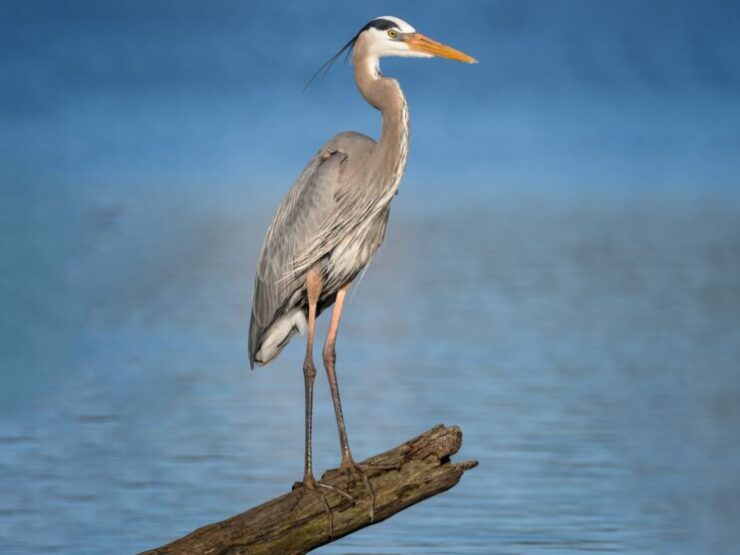
Distinguishing Features – Upper parts, greyish-blue; head, white with a wide black stripe on either side, extending from the eye to a long slender crest; neck, grayish-brown edged with black downsides.
Underparts are randomly streaked and colored black and white. Bill yellowish, long, tapering to a sharp point. Legs, browny-green, long. Male and females are essentially indistinguishable.
- Size – 108 – 132 cm
- (43.25 – 53 in)
Habitat
In and around fish-bearing waterways.
Nesting
In deciduous, coniferous, or mixed woods, usually in small colonies. A flattish nest is made of twigs and small branches in the upper parts of tall trees.
- Eggs, 3 – 5; light greenish-blue.
- The incubation period is 26 – 27 days.
Notes
The Great Blue Heron’s long, stilt-like legs allow it to wade in shallow waters to feed on a diet of fish, frogs, and water snakes. It will also eat salamanders, large insects, mice, and other small rodents.
The song of the Great Blue Heron is a goose-like Onk.
If you found this post interesting you can take a quick look at our post on Cannada goose or you can check out more at our site borealforest.org.